News · Chatham-Kent, Ontario
Published
McNaughton Avenue School’s Outdoor Classroom Takes Root in Chatham
A schoolyard can contain a great deal of grass and still have room for something new. At McNaughton Avenue Public School, that something is a growing outdoor classroom: more than 60 native trees planted this autumn, with a garden, pathways and learning materials planned around them. The pupils will not have to board a bus to find the first lesson.
Facts checked
In this story
Someone noticed the unused corner
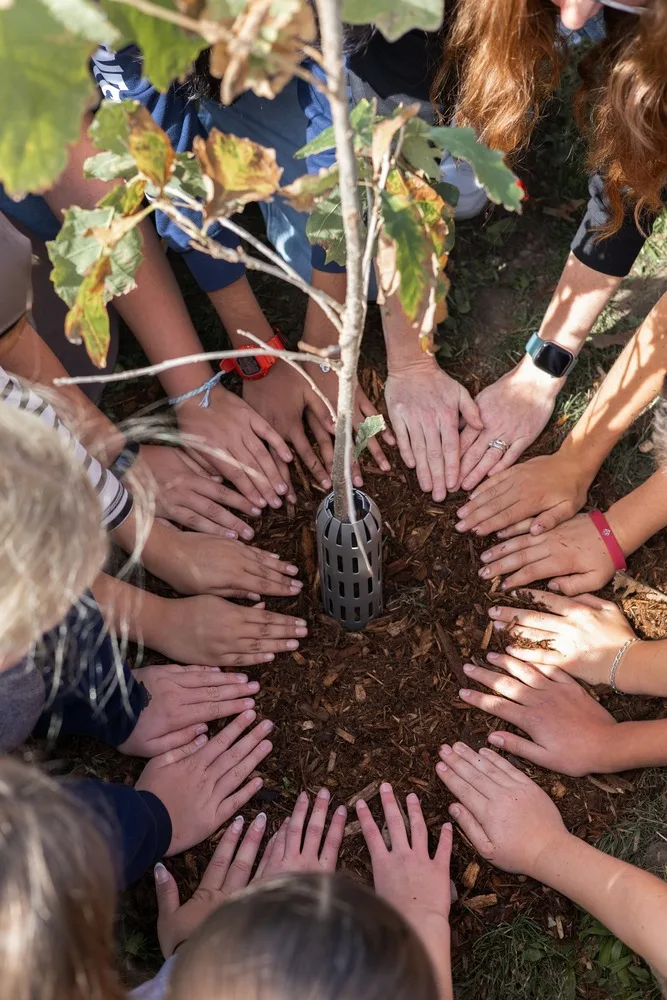
The school board’s October 13 account begins with a piece of under-used green space in the northeast corner of the schoolyard. NatureCK project coordinator Mark Gagner saw its potential, and volunteers came together to plant more than 60 native trees from more than five varieties. The approximately $15,000 project was funded through grants, partnerships and donations, rather than being described as a fully built new facility bought off a shelf.
It is a small but appealing change in how a school ground can be understood. An open field has obvious uses, particularly for running games. Adding a planted area does not require deciding that grass was a terrible idea. It gives the same ground another kind of purpose: somewhere a class might return to see changes in plants, seasons and the creatures using the space.
Source: LKDSB, Community Collaboration Takes Root at McNaughton Avenue Public School, October 13, 2026
The future classroom is not finished yet
The announced plan includes a 20-by-30-foot pollinator garden, two benches, educational signs and card sets for classroom use, with an interwoven stone-chip pathway. Keep the verbs straight: those are the stated plans around the first planting phase. This article does not present every feature as completed or the whole site as ready for unrestricted visitor use.
That makes the project a story about beginnings rather than a grand opening. Trees take time to establish, and a planted learning space needs care as well as a good first afternoon. The school board describes possibilities for identifying species, understanding pollinators and exploring local ecosystems. Those are opportunities for teachers and pupils, not a promise that a garden will somehow deliver the entire curriculum by standing there looking educational.
Source: LKDSB, Community Collaboration Takes Root at McNaughton Avenue Public School, October 13, 2026
The work has several sets of hands on it
NatureCK led the project, with support from Greenfield Global, the Municipality of Chatham-Kent, the Lower Thames Valley Conservation Authority, Enbridge Gas and members of the school’s parent council. The board’s account places collaboration at the centre of the story. Money, local knowledge, volunteer effort and a willing school all had to meet in the same place before a useful corner could become a planted one.
The different contributions explain why a comparatively modest schoolyard project has several organisations attached to it. The school supplies the learning setting, NatureCK leads the project, and partners contribute funding, knowledge and volunteer support. The first planting is a visible beginning. The announced garden, teaching materials and pathway will determine how that beginning becomes a regularly useful outdoor classroom.
Source: LKDSB, Community Collaboration Takes Root at McNaughton Avenue Public School, October 13, 2026
Source: Local discussion of the McNaughton schoolyard project
A school project, not a new tourist attraction
There is an important practical boundary here. This is a working schoolyard. The story is not an invitation for the public to arrive during the school day, photograph children or assume access to the new planting. Families connected to the school should use normal school communication to ask about participation or the project’s progress. Other readers can take an interest without turning a lesson space into an attraction.
The pleasing part is that the change stays close to ordinary life. The same pupils who know the schoolyard now may get to see the new trees become familiar features, and learn why they were chosen. A small sapling is not an impressive replacement for a fully grown tree. It is a useful invitation to notice that growing takes time. Schools are already fairly well acquainted with that principle; this one is giving it a patch of ground outside.
Source: LKDSB, Community Collaboration Takes Root at McNaughton Avenue Public School, October 13, 2026
A learning space that can be revisited
The school board describes an opportunity to identify trees, learn about native plants and pollinators, and explore the local ecosystem. The advantage of putting that work beside the school is repetition. The same space can be revisited as leaves, flowers and growing conditions change, rather than being encountered once on a distant trip. That is the purpose described in the announcement, not a claim about lessons already taught.
The physical plans are deliberately modest: a 20-by-30-foot pollinator garden, two benches, educational signs and card sets, plus a stone-chip path. Each has a role around the planting, from somewhere to pause to a way to organise observation. Completion remains to be confirmed. The distinction matters because the story is strongest as an account of a developing school resource, rather than an opening announcement for an attraction the public can visit.
Source: LKDSB, Community Collaboration Takes Root at McNaughton Avenue Public School, October 13, 2026
Source: Local discussion of the McNaughton schoolyard project
Questions people ask
Which Chatham school planted the new native trees?
The project is at McNaughton Avenue Public School in Chatham, according to the Lambton Kent District School Board.
Source: LKDSB, Community Collaboration Takes Root at McNaughton Avenue Public School, October 13, 2026
How many trees were planted?
The school board reports more than 60 native trees representing more than five varieties.
Source: LKDSB, Community Collaboration Takes Root at McNaughton Avenue Public School, October 13, 2026
Where in the schoolyard is the project?
The board places the first planting in the northeast corner of the schoolyard. This is not a public-access invitation.
Source: LKDSB, Community Collaboration Takes Root at McNaughton Avenue Public School, October 13, 2026
How much is the outdoor learning project expected to cost?
The board describes an approximately $15,000 project supported through grants, partnerships and donations.
Source: LKDSB, Community Collaboration Takes Root at McNaughton Avenue Public School, October 13, 2026
Who is leading the project?
NatureCK is leading it with the school and a range of local partners and supporters.
Source: LKDSB, Community Collaboration Takes Root at McNaughton Avenue Public School, October 13, 2026
Is the pollinator garden already complete?
The October announcement lists a 20-by-30-foot pollinator garden as part of the plan. We have not verified its completion.
Source: LKDSB, Community Collaboration Takes Root at McNaughton Avenue Public School, October 13, 2026
What other features are planned?
The plan includes benches, educational signs and card sets, and a stone-chip pathway, alongside the planted trees and garden.
Source: LKDSB, Community Collaboration Takes Root at McNaughton Avenue Public School, October 13, 2026
What could students learn in the space?
The board describes opportunities to identify tree species, learn about native plants and pollinators, and explore local ecosystems.
Source: LKDSB, Community Collaboration Takes Root at McNaughton Avenue Public School, October 13, 2026
Can the public visit the outdoor classroom?
Do not assume public access. It is part of a working schoolyard, and any participation or visit must be arranged through the school.
Source: LKDSB, Community Collaboration Takes Root at McNaughton Avenue Public School, October 13, 2026
How can school families learn more about the project?
Use the school’s normal communication channels and the school board’s announcement to ask about current progress or participation.
Source: LKDSB, Community Collaboration Takes Root at McNaughton Avenue Public School, October 13, 2026
Something changed? Tell us about a correction.